Creative Rewards & Public Acknowledgement

Standard

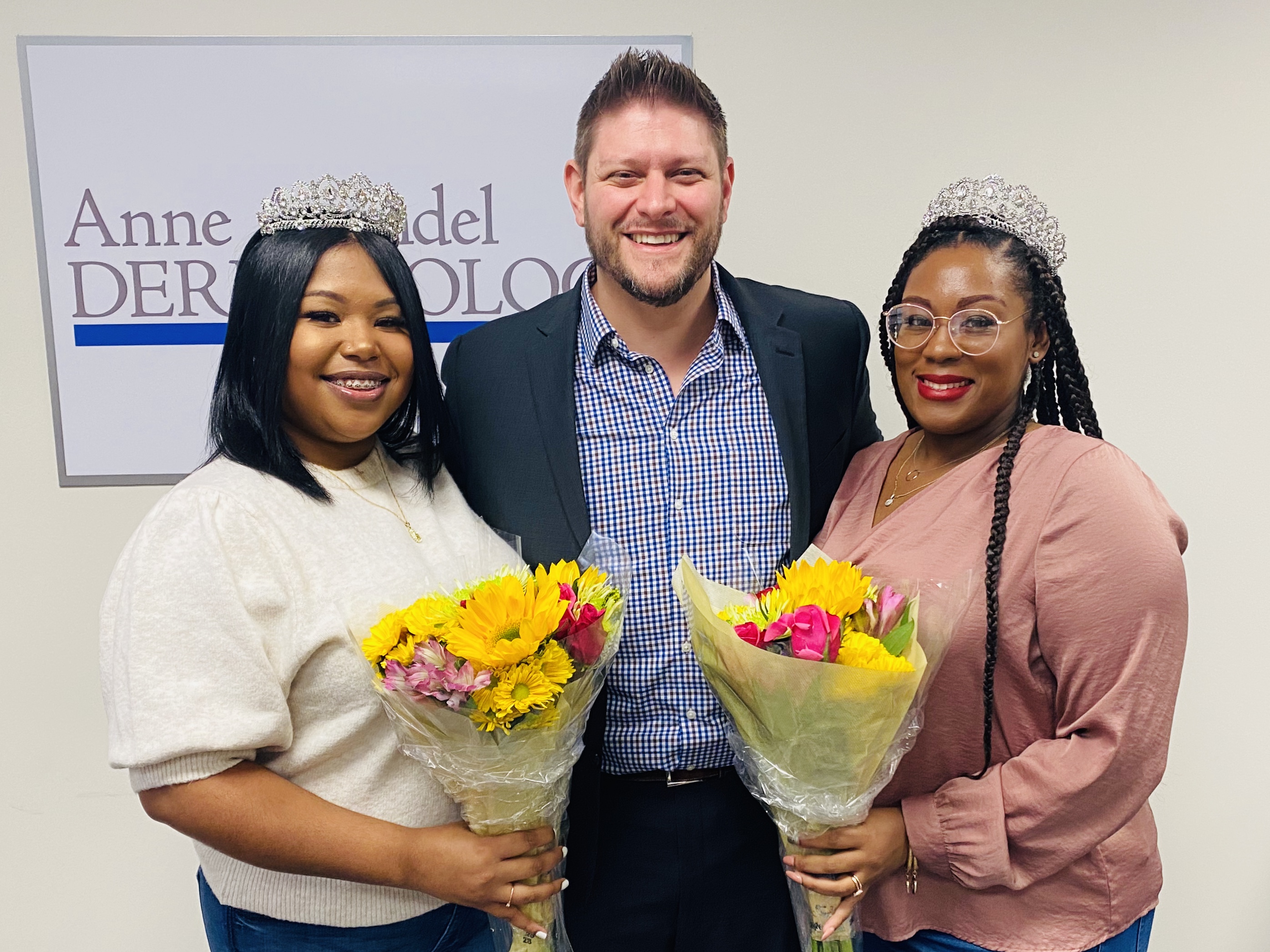
These two amazing ladies each handled over 25,000 interactions a piece in 2019, leading the way for an incredible year of growth.

My leadership team and I recently oversaw some of the largest year-over-year contact center volume growth I have ever been a part of. Our center grew by 40% and the answer rates actually went up by 3%! That’s insane. Most impressive was that labor costs and headcount did NOT grow anywhere near that 40% increase. It was marginal. How? GREAT TALENT!!!

We took time out to acknowledge two of our hardest working performers for digging in, finding the most efficient way to perform the job as it changed, and setting the standard across the division. Keya (left) and Desi (right) were paraded around the building like the call center queens that they are, tiaras and all! We then took them out to lunch and had a nice 2 hour escape to talk about their 2019.

And like most amazing employees they continued to go above and beyond. When we discussed the future of our department, both chimed in with the need for more team building. One suggested a team outing that centered around community service. The other proposed a team escape room exercise. Brilliant. I love working with people. These two are the reason why this latest project was an immense success.

At the end of the day we want our best and brightest to know they are valued, we want the environment to know they are valued, and we want to include them in the overall management strategy. Thank you Keya and Desi for being so awesome.

Game-ification #Win

Standard

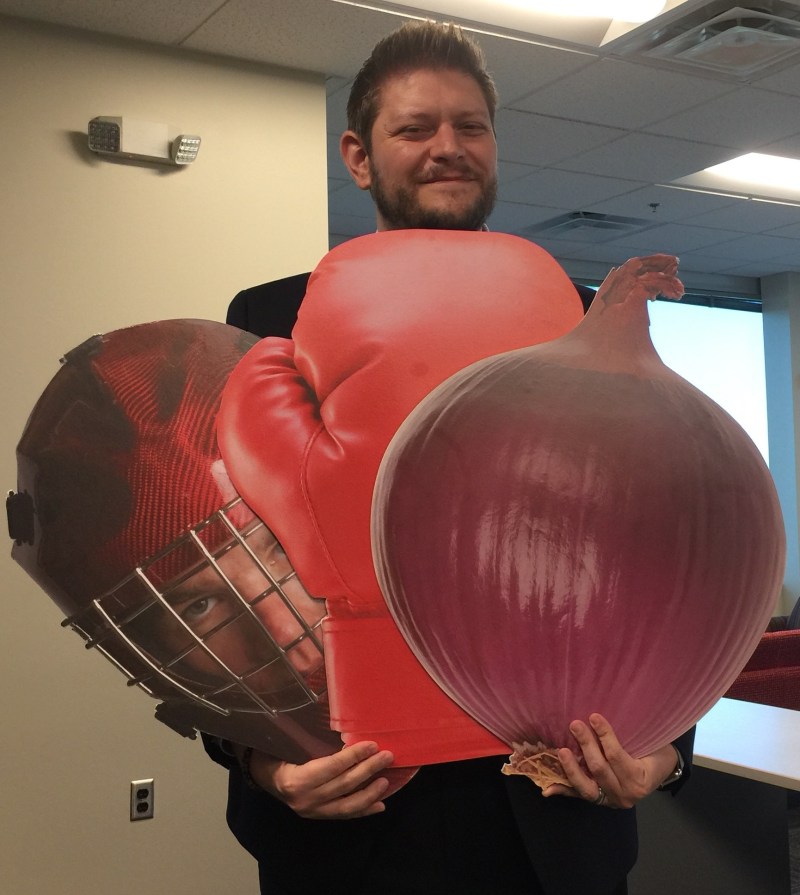
I don’t like to #Fail. Sooooo, I brought a different concept to the office to give Gamification in the workplace another shot. This time, it worked. All it took was a 3 foot tall RED ONION.

My latest challenge in operations management takes place at a home improvement firm, specifically the call center. The call center is relatively young to the business, and it’s purpose is still being defined. Right now it functions as a sales lead generator and a sales appointment preserver. On the sales preservation side, the team takes and makes customer calls to set and confirm appointments. The most important task? Preventing cancellations.

Have you ever cancelled a recurring service, or even an annual subscription? The best providers have a tried and true method to identify why you are cancelling, meaningful responses and solutions to keep you as a customer, and measureable results that show the teams’ ability to save accounts. All of this requires commitment, training, and effort. DirecTV does an amazing job of this, always offering free content or billings rebates, maybe even equipment upgrades to ensure your continued loyalty. I reviewed hundreds of the teams recorded phone calls and realized my newly inherited team lacked training and consistency with regards to asking questions and being persistent. I went to Fathead.com and ordered a large onion, boxing glove, and goalie mask.

I decided to leverage symbols associated with the desired behaviors and results, and empower peer-to-peer recognition to drive change. The rules? If anyone inside or outside of the call center heard a teammate asking multiple and meaningful questions about why a customer was cancelling their appointment, we handed that person the ONION (stripping back layers of the onion, finding the hidden or unspoken reason why a customer intends to cancel). If someone heard a teammate fighting through objections and putting a visible amount of emotional effort and focus into saving the appointment, they got the BOXING GLOVE. And finally, if they saved the appointment and convinced the customer to give us their time, they got the GOALIE (Saaaaaaaaave!). Everyone could give or receive any of the symbols multiple times within a day.

Within the next 3 weeks we had increased the number of scheduled appointments remaining on-schedule by +25% (a large improvement for this environment). We had achieved the intended result; however, there were a handful of unforeseen benefits that compounded our overall divisional performance improvement. The Sales side of the division had begun to take and use symbols like the BOXING GLOVE! They heard their sales peers countering objections with reasonable responses and controlling questions, and they decided to join in on the game. I ultimately got them a few symbols to use specific to their skill set (a large $100 bill for scheduling appointments within the same day, a very impactful result that often leads to a sale). Additionally, other company executives and leaders saw the symbols, visited the call center, and engaged with teammates asking “Tell me about the ONION?” Needless to say, the entire concept made changing and evolving more stimulating, drenched the environment in awareness around desired behaviors, and celebrated real-time change and results.

Further cementing the concept’s success was its carryover into owning customer interactions and asking customers purposeful questions. These actions are always a hallmark for success in sales. The Sales portion of the call center had begun to ask deeper questions about customer needs, and they began to fight harder when a customer would object (respectfully, refuse to accept “NO” for an answer). Through Mid-August call center sales were forecasted to close +50% above the prior month’s totals. Gamification #Win!

Bubbles = Motivation

Standard

Goals, when scaled appropriately, are ambitious and intimidating. Even the most confident swallow hard and blink prior to telling oneself, “I got this.” It’s the “American Way” to be super ambitious and push ourselves beyond some definition of excellence. But is this fun? Do you use bubbles to motivate?

It’s no longer effective to sit down with a team or individuals and attach their efforts to a goal or a series of very relevant and smart metrics. The trend in some industries has been the “gamification” of work, but that can be a tad extreme if the resources aren’t in place or the industry and role is a bad match for that concept. Bubbles represent that soft spot in between plain numbers and extreme gamification.

Bubbles and I have recently found motivational success and excitement with my latest sales team. Simply put, we have a team revenue goal every day. If we hit that goal, we get bubbles. I went to Amazon and found a $40 electric, pseudo-industrial, bubble machine that zaps to life when plugged in and turned on. Once the switch is flipped our robo-motivator celebrates our team-based success by vomiting thousands of colorful bubbles all over their corporate desks. IT’S SO MUCH FUN!

Each day, every time someone processes a large sale, or the team knows they’re getting close to the daily target, the entire team starts rallying behind the concept. They bark, “Mike! Get the bubbles ready!” or “Rebecca is getting bubbles tomorrow!” Managers devise complicated incentive plans with multiple qualifiers to hone in on and reward the actual behaviors that drive results, so they think.

Maybe it’s much easier. Maybe you just need to balance the heavy burden of chasing high performance with something fun. What is your sales team’s “Bubbles?”

Apple Watch = Must Have for 2015

Standard

The reviews are creeping out. The Wall Street Journal, Forbes, and CNET have all spent some time with the device. Their voices are a mixed bag of nerdery. Techie gals criticizing the clumsy computerized fashion mash-up. Fashionistas wondering when such practicality has been packaged so well. Regardless of where you or your favorite reviewer land, the Apple Watch will be THE MUST HAVE for 2015.

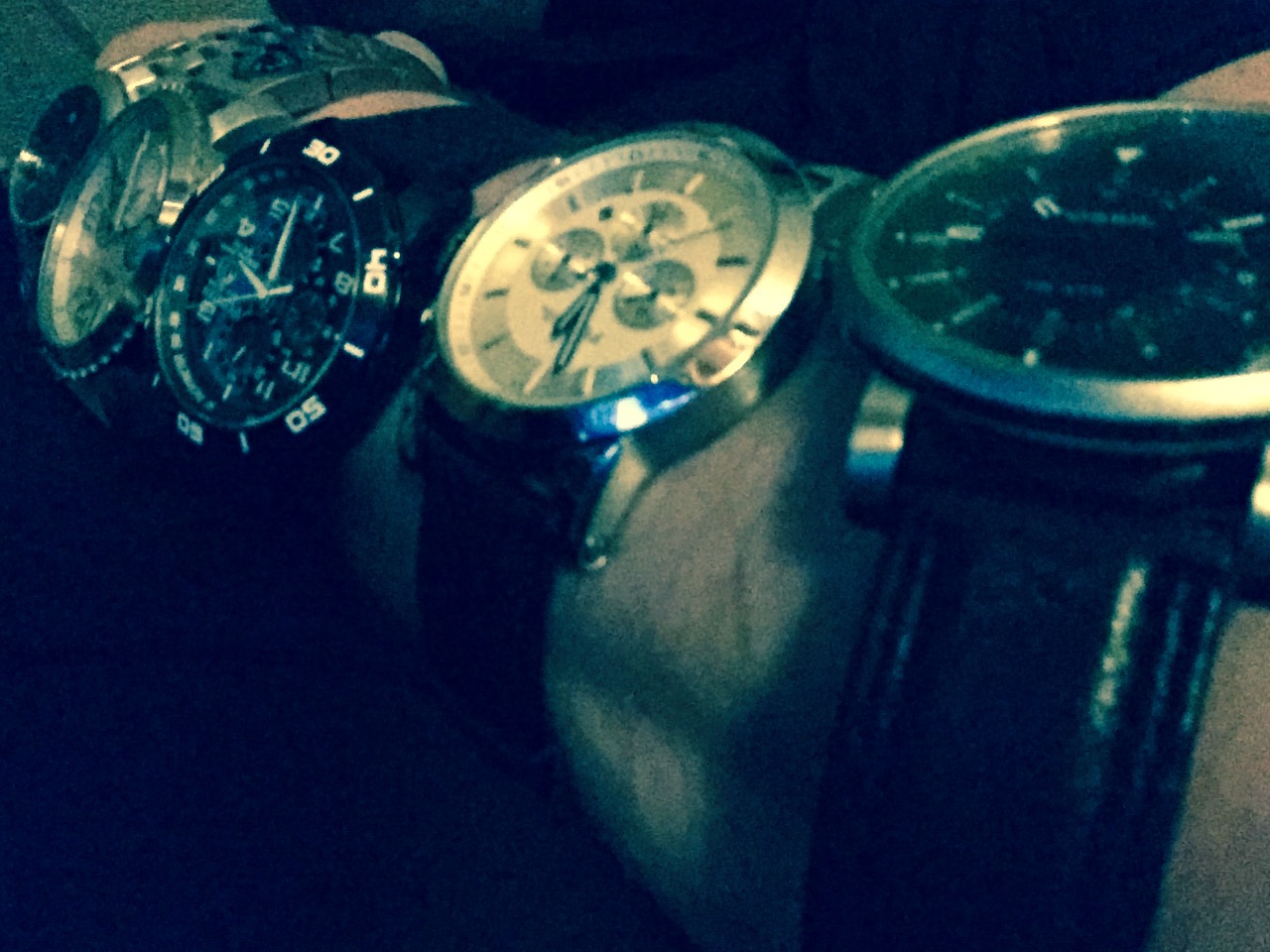
The average U.S. man has 5 watches. #Metrosexual

The average U.S. man has 5 watches. #Metrosexual

Some detractors wonder out loud “Who’s going to want another watch, nonetheless one that costs triple the price?” But the market is already there. Wrists are yearning to be gauged on their health and appearance.  Did you know that 3.3 million fitness bands and activity trackers have been sold between April 2013 and March 2014 in the U.S.? The Fossil Group, Inc., which operates over 10 global timepiece brands across a variety of price spectrums, sold $1.5 billion in watches in 2014. The wristwatch market is STRONG as Bloomberg reported in February that the average male U.S. consumer owns 5 watches.

Detractors will point out that the Apple Watch isn’t a stand-alone product, but rather a pricey accessory requiring the newest iOS mobile operating system. How limiting of a factor might that be? As of October 2014 Apple has sold over 105 million iPhone 5’s, and as of Q1 2015 Apple sold over 74 millions iPhone 6’s. That’s a large customer base, and it’s growing at a pretty aggressive rate with deeper cellular discounts and 0% finance programs to facilitate upgrading and first-time client acquisition. “Who’s going to want another watch, nonetheless one that costs triple the price?” Apple customers. That’s who.

It’s the most customizable watch, or computerized device, EVER. From a watch perspective, brands like Michele and Fossil have offered customization in a variety of bands and metals. None of these brands offer the multiples of customizable variations that the Apple Watch and its small retina-raving face will promise. Can you imagine the visual capabilities the Apple Watch customer will have once the third party venders check in with a new phalanx of covers, bands, and apps for deeper customization of the product? “Who’s going to want another watch, nonetheless one that costs triple the price?” Another watch? It’s all of the watches you planned on buying in the future wrapped into a 42mm case. Take the cumulative cost of those five watches the average U.S. metrosexual owns, toss in a FitBit or two, and you’ll most likely arrive between $500 to $1,200 (unless you have premium Tag Heaer taste). It’s easy to conclude that the Apple Watch brings great value as a complete substitute.

Some critics seem obsessed with the reality that Apple will release future iterations of the device, and this truth is waved in your face  while demanding you wait for the Apple Watch 2 and it’s ignorantly assumed enhancements. Don’t soil your bell-bottoms when I tell you this, but obsolescence exists in the world of fashion and those trends can move just as quickly as shifts within the tech sector. Not wearing your “Don’t Tase Me Bro” t-shirt anymore? The Apple Watch will be as durable to natural shifts in trends and technical abilities or limitations as ANYTHING ELSE you already buy over-and-over again as the seasons zing by.

I believe it was 2010, weeks prior to the launch of the first iPad, that I heard critics declare “Who’s going to want a large iPhone that doesn’t take calls?”
Me and my hundreds of millions of minions.